
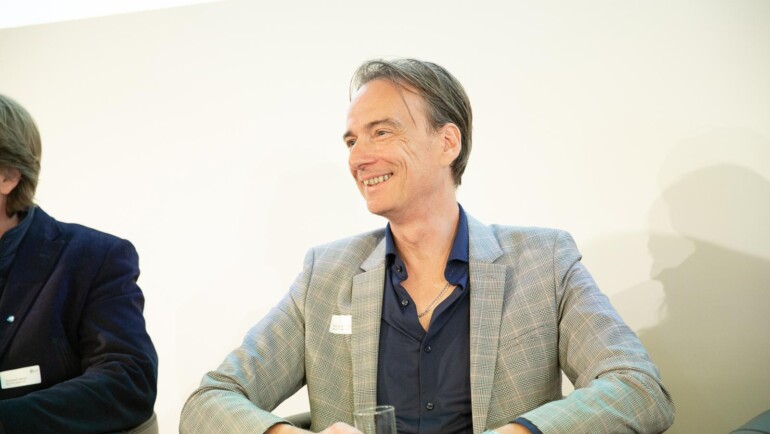
After 18 years at mica – music austria, Franz Hergovich is stepping away from Austria’s music support and advisory sector. Since 2008, he has held various positions at mica, advising musicians on professional and legal matters and helping them take their first steps into international markets. As a co-initiator of Austrian Music Export, he played a key role in developing Austria’s international music export activities. Before that, Franz Hergovich worked in music distribution, organised concerts, worked as a DJ and was involved in European music networks. However, due to a serious chronic illness, Franz Hergovich was forced to bring his work at mica and Austrian Music Export to an early end last summer. Together with Michael Ternai, Franz Hergovich now looks back on his beginnings in the music business, his time at mica and, of course, his particular passion, Austrian Music Export.
You worked in a record shop in the late 1980s and subsequently witnessed the transition from vinyl to CDs and, eventually, digitalisation. When did you become aware that the music business, and the ways in which music is produced, distributed and consumed, were constantly changing—and at an ever-increasing pace?
Franz Hergovich: In the very beginning, when I was working as a DJ and in record shops, and later organising concerts, I didn’t think about these kinds of questions at all. I was really only interested in the music. The music business, the music industry, or whatever you want to call this ecosystem, wasn’t something I was particularly concerned with back then. I should say that, ultimately, even towards the end of my career, when I was dealing with these issues a great deal in my work, I was only interested in them insofar as they helped me find the right listeners for the music, ensure that musicians and their business partners could make a decent living from it, and create conditions in which people could work creatively without being constantly disturbed. The business side of things, in itself, has never really interested me.
Back then, one of the most obvious changes was the arrival of CDs and the gradual disappearance of vinyl. That was also a form of commercial exploitation. People bought their entire collections all over again, believing that the sound quality was so much better and that CDs would last forever. Of course, that turned out not to be true. And I always disliked CDs as a physical format. I never liked them.
I also began to notice changes in the way money was becoming increasingly important outside the mainstream, particularly in the live music and events sector, where prices really exploded. There was a period, especially in electronic music, when I booked quite a lot of international acts. It all happened on a very friendly, informal basis. You would meet people at parties, backstage or in clubs, sometimes abroad, and ask them if they fancied coming to Vienna for a gig.
And they were happy to do so. These were handshake deals, without management involved, and they worked well. Within a very short time, however, the whole thing became much more professionalised, if you want to put a positive spin on it.
Increasingly, though, there were DJs who had produced perhaps just two 12-inch singles and were demanding astronomical fees for playing. They could get away with it because that particular music was taking off in the United States at the time. It was already becoming apparent that the business was going to change considerably and that there was less room for idealism.
I then spent a long time working for a distributor, Soul Distribution. We distributed electronic music from Austria worldwide, from Kruder & Dorfmeister to Parov Stelar and Waldeck. In that job, I experienced the changes on a much more fundamental level when digitalisation began and traditional retail channels and distribution networks started to become increasingly ineffective. The shelf space allocated to CDs in major retail stores kept shrinking, and the number of copies we could sell of individual releases also declined. The record labels’ usual panic response was simply to release more music because they were selling fewer copies of each release. This ultimately led to the complete collapse of the physical distribution and retail system.
I also witnessed these developments in retail: how major chains such as MediaMarkt, Saturn and Libro put increasing pressure on small independent record shops. I wouldn’t necessarily say they killed them off, but they certainly made life increasingly difficult for them. The major record companies allowed these chains to dictate terms that small retailers could no longer afford to meet.
For these large stores, selling music was never their core business. In reality, they were selling refrigerators and all kinds of other products, using recorded music to attract customers. At times, they sold CDs almost at cost price. Naturally, a small independent retailer simply couldn’t compete with that. Later, when these chains reduced the floor space allocated to recorded music, the major labels started complaining that specialist record shops were disappearing. But they had helped bring about that situation themselves. Those were some of the first major changes I witnessed.
By the time I started working at mica, the transition to digital was already well underway. At the time, I felt that musicians had yet to see many tangible benefits, because accessing the digital market was still far from straightforward. Even things such as direct-to-fan services, which everyone was talking about back then, as well as crowdfunding and digital distribution, were still difficult to manage. At the same time, it was already very hard to find people willing to work with you or invest in your career. The days when record labels invested in developing artists were largely over. It was an incredibly difficult period for musicians.
Today, I feel that the benefits of digitalisation have long since become apparent and that promoting yourself, releasing music and doing all the other things involved have become significantly easier. But the belief—or the promise—that you could do everything yourself and no longer needed a distributor, a label, a publisher or a manager has, of course, turned out to be an illusion. There are limits to what you can achieve on your own.
If, for example, you want to get onto the right playlists on the major streaming platforms, you will need professional help. Even web-based tools that claim to be able to do this for you don’t deliver satisfactory results. The digital music market is still a people business. Whether you work with someone who offers this as a standalone service or with a label that includes it as part of its services ultimately makes little difference. You will still need professional partners, particularly when it comes to international expansion and reaching your full potential in the global market.
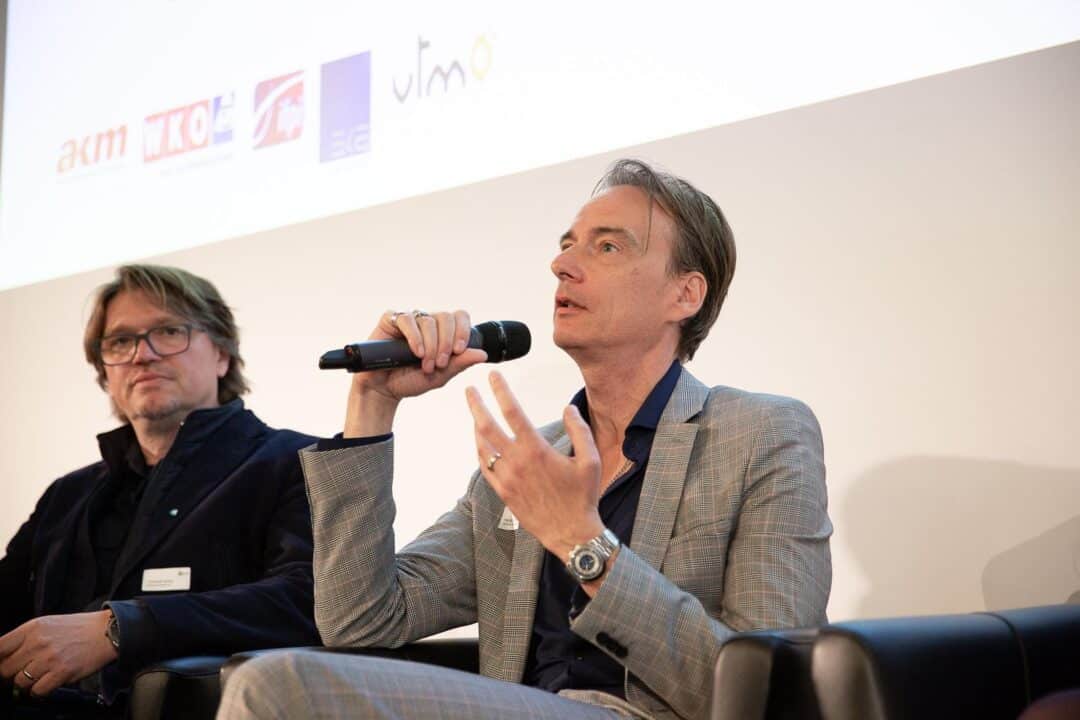
You’ve described the collapse of traditional music retail and the beginning of digitalisation at the same time. How did you experience the Austrian music scene during this period of upheaval, and what changed in your view in the years that followed? You started working at mica around that time.
Franz Hergovich: I joined in 2008, and I would almost describe that period as the low point. It was a genuinely difficult time for record labels and artists, and not a great deal of exciting things were happening either.
Okay, Soap&Skin was just beginning to break through. When I started, that was pretty much the only name that gave you a sense of an Austrian act with the potential to succeed internationally. Beyond that, the scene was nowhere near as broad or as vibrant as it is today.
Over the following years, I think mica, and later Austrian Music Export, along with many other private initiatives, festivals such as Popfest and Waves, and various new funding schemes, helped create a sense of new momentum and improve the image of the music industry.
Quite a few young people arrived on the scene with fresh energy and a desire to make things happen. And you need that, of course. You always need individuals who are willing to take risks and devote more than just their spare time to these things.
I think quite a lot came out of that, and there was also significant progress internationally. Austria’s reputation as a music country, beyond its classical music tradition, changed considerably for the better, particularly in Germany. Several Austrian acts made a real impact there. We all know the names: Bilderbuch, Wanda, and so on.
German record labels and concert agencies genuinely began looking more closely at Austria and scouting for new talent. Later, the same thing happened in German-language rap. Raf Camora was a huge success in the German market. That led them to start signing practically every young Austrian rapper, male or female, they could find. A lot was happening. It was also a period of very positive change for mica itself.
When I started, mica was somewhat marginalised and isolated, partly because of the management at the time, which struggled to get along with other players in the industry—or perhaps the feeling was mutual. The room for manoeuvre was very limited. The services were there, but they weren’t being communicated particularly well or used to their full potential.
In the years after I joined, more new people came on board and there was a change in management, which transformed the situation considerably.
Suddenly, mica was able to fulfil its role much more effectively and offer services that people made extensive use of. Apart from export, which has always been my particular passion, I see the advisory services mica offers today, including legal advice and contract consultations, as well as the template contracts we developed and published during that period, as real milestones.
Over time, mica also managed to establish itself in the eyes of musicians not merely as an institution, but as a partner they could turn to and with whom they could build a relationship based on trust.
During my time there, I was able to support some musicians over several decades, accompanying them from the very beginning of their careers to the point where they were negotiating international contracts and deals—and still wanted our advice. I think that’s fantastic.
You’ve already mentioned Austrian Music Export, which you helped establish. How did it come about?
Franz Hergovich: For me, Austrian Music Export was another milestone. For one thing, we managed to resolve the differences with the Österreichischer Musikfonds and AMAN. AMAN was a label initiative at the time that was also trying to promote music exports, having made its own attempt to establish an export office.
From an international perspective, it was obviously confusing and frankly absurd that a small country like Austria had two separate organisations trying to do the same thing. Bringing them together and getting all the partners and funding bodies with an interest in promoting Austrian music internationally under one roof wasn’t easy, but it was extremely important.
How long did that process take? Or when exactly was Austrian Music Export established?
Franz Hergovich: The first discussions took place fairly soon after I joined mica. It then took two or three years before everything actually came together. I think it only really became possible with the new management and the new foundation of trust that had developed.
A major breakthrough for AME probably came with the project that saw Austria take centre stage at Eurosonic in 2014. We spent a year working on it. It was a flagship project that allowed us to secure substantial funding and demonstrate both what could be achieved with greater financial resources and how much we could actually accomplish.
The impact wasn’t just international. I carried out some follow-up analysis at the time. I think 18 Austrian acts performed at the festival, and I looked at how many concerts they had played in the year before and the year after. There was a significant increase.
But the project also had a major impact at home. There was so much media attention, and people began to realise that Austria produced great music that could hold its own internationally. It gave the whole scene a bit of a boost.
I had the feeling that people started to believe in themselves more and think: we don’t have to limit ourselves to Austria. We can dare to travel to an international festival somewhere and present our music there.
You can measure this change in numbers, too. When I first started working on export, at most one or two Austrian bands would play at Eurosonic. Now it’s regularly between six and ten. The same goes for the Reeperbahn Festival: in the past, you might have seen a handful of Austrian acts there; now there are often 20 or more.
So visibility has increased enormously. Visibility alone doesn’t guarantee success, of course, but you have to create opportunities and open doors if international success is to happen. You also need to provide as much support as possible, not just for artists but for the people working with them—labels, managers and publishers. Exporting music costs an enormous amount of money and involves considerable risk.
One of the biggest challenges, in my view, lies in the highly fragmented economic structures of the industry. Almost everyone is a one-person operation, and very few have employees. Nearly all of them are struggling to survive. That’s an area where there’s still a long way to go.
We’ve created some excellent support programmes for the industry. For example, there are open calls that allow people to travel to new markets with very little of their own money. Once there, they get to meet key players in those markets. But what they also need is the time to spend a week somewhere. And even that is no longer feasible for many of them, because they often have a regular job on the side or are simply overwhelmed by the workload they’re already expected to manage on their own.
So I think what we need are larger, more sustainable structures. These individual operators should be supported in bringing more people on board or joining forces so they can achieve more together.
As far as the artists are concerned, I think a tremendous amount has changed. There are now so many talented young musicians who, from the very beginning of their careers, are already being supported by international partners. You can see this particularly clearly in Germany. That would have been completely unthinkable in the past.
So there’s reason to be optimistic that things will continue to develop and that more artists will achieve international success. When it comes to the industry itself, however, I think the situation is considerably more difficult at the moment. In the beginning, we really did experience a sense of new momentum, with lots of young labels and agencies emerging. But some of them have since disappeared, given up, suspended their activities or scaled back their operations. Fewer new players have emerged to replace them than we might have hoped.
For a while, I was also really pleased to see more women working in the industry, running agencies, record labels and management companies. But in the end, only a handful of them remained, and over the past few years I’ve had the feeling that not many new people have come along to take their place. This is certainly also down to the difficult economic situation and the fact that you need to be able to afford to do this kind of work in the first place.
One issue is that the music industry often starts out as something of a hobby and, if things go well, eventually becomes a professional occupation. In reality, though, it’s a field that tends to favour people from financially privileged backgrounds who can afford to pursue it. The same applies to making music: to some extent, it’s easier for those who have the financial means to do so. After all, very few people actually manage to make a living from music alone.
And we haven’t even touched on the question of age, which makes things even more difficult. If you haven’t had a major breakthrough and are still dependent on touring and playing concerts that barely pay enough to live on, while streaming revenues are equally insufficient, it eventually becomes a real struggle.
When you first started at mica, Austrian artists were barely played on Austrian radio, apart from perhaps the big Austropop names. The emerging scene seemed to be completely ignored. To what extent do you think this situation actually encouraged musicians and bands to pursue their own artistic interests, ultimately contributing to the development of such a diverse scene?
Franz Hergovich: I think the situation wasn’t necessarily a bad thing when it came to artistic diversity and quality. Those who felt a strong urge to make music weren’t really thinking about commercial success; they simply did what they felt compelled to do. And that’s obviously better than constantly chasing chart success or radio airplay and conforming to all the requirements you have to meet to fit a radio format—things like how many seconds can pass before the chorus kicks in, and all that nonsense. When you think about it, those requirements are extremely restrictive artistically. We didn’t have that. I found it refreshing. And that’s why we also had a great deal of music that was, in some cases, quite radical and genuinely exciting.
Nowadays, there’s also a lot more commercially oriented music, including Austrian pop that, in my opinion, is of international quality. So now we have both. That’s the ideal situation, really.
Another development was that artists started singing in German again.
Franz Hergovich: Yes, quite a few people started singing more in German again. When I was young, that was completely frowned upon. Okay, there was the Neue Deutsche Welle movement for a while, but then there was very little for many years. German-language music was largely confined to what was categorised as Austropop. Anyone who wanted to make a different kind of music would never have considered singing in German.
Today, that’s perfectly normal. For one thing, it probably allows many artists to express themselves more effectively. Their English wasn’t always particularly good, after all. And secondly, it opens up the German market, which is one of the largest in the world anyway, and where you have enormous advantages thanks to a shared language, overlapping media landscapes and genuinely good industry contacts. So that was a very sensible development.
Your work wasn’t limited to pop music; it covered all genres. And, remarkably, it has produced results across the board, as showcase festivals aren’t confined to the pop sector either. But when did you first realise that the idea was actually working? When had the structures developed to the point where you could genuinely make music export work?
Franz Hergovich: We built things up across all genres, and fortunately I always had a great team with expertise in jazz, global music and contemporary music. As for when we realised it was working, I’d like to return to the Eurosonic project. At the time, we were actually able to demonstrate with figures and statistics that the investment had paid off. We put together a substantial press dossier and were able to present numerous television reports, which helped convince the funding bodies.
From then on, we had a relatively solid basic level of funding. We never received multi-year funding commitments; we had to submit new applications every year. But there was an understanding that a certain level of funding would be available.
It’s simply impossible to work otherwise. Even before you have funding confirmed, you need to plan collaborations and may have to sign contracts for projects that won’t be carried out until the following year.
That said, I still see the lack of genuinely long-term, substantial funding commitments as a problem. To work efficiently and develop strategies over several years, you need to be able to allocate more substantial resources to specific markets.
Let’s say, for example, that I want to develop activities in India. I might travel there with industry representatives or take individual acts to showcase events. But if I do that, I really need to know that I’ll also have the necessary funding over the following two or three years. If the people involved have done their job well, invitations to perform or collaborate will follow. And when those opportunities arise, they need to be given the resources to take them up.
Because the reality is that, at the beginning, they’ll receive little or no performance fees and will at least have to cover their own travel costs. You have to build an audience first, and local promoters don’t have access to the kind of funding available in Europe, which means they can afford to take fewer risks. Our companies and artists can’t shoulder those risks either. That’s where export offices need to step in.
If I don’t have that money available, all the work and the impact of the initial efforts can simply fizzle out. There are countries with better funding structures that are able to plan much further ahead. We need to catch up with them.
And we’ve known for quite some time what needs to be done. We’ve contributed to studies for the European Commission that developed strategies for European music exports and set out the individual steps in considerable detail. But I have to say that the funding bodies haven’t fully taken those findings on board yet.
I understand that each funding body has its own restrictions on what it can support and how. But I see an enormous amount of untapped potential here. We have fantastic talent. We have companies that want to work with these artists internationally. What we’re lacking are the resources to make the most of that potential in a sustainable and effective way.
Although you have developed funding schemes to support this work…
Franz Hergovich: Yes, there have been some good funding instruments, and they still exist. I don’t want to complain. There are many countries that don’t have anything like this. Austria’s funding landscape isn’t bad. But when it comes to exports in particular, there’s still so much more we could do. There is a fair amount of funding available for production and things like that. If I had one million euros for production funding, though, I’d say I needed ten million for internationalisation. That’s the kind of ratio I have in mind. Those aren’t realistic figures in absolute terms, of course, but I think so much more would be possible.
Still, we’ve managed to get things started and create opportunities. From my perspective, the work isn’t finished yet. But that’s fine, too. Things will continue after I’m gone. There will be people who will hopefully take these ideas forward.
Networking is essential, of course. You’ve been involved with various international organisations…
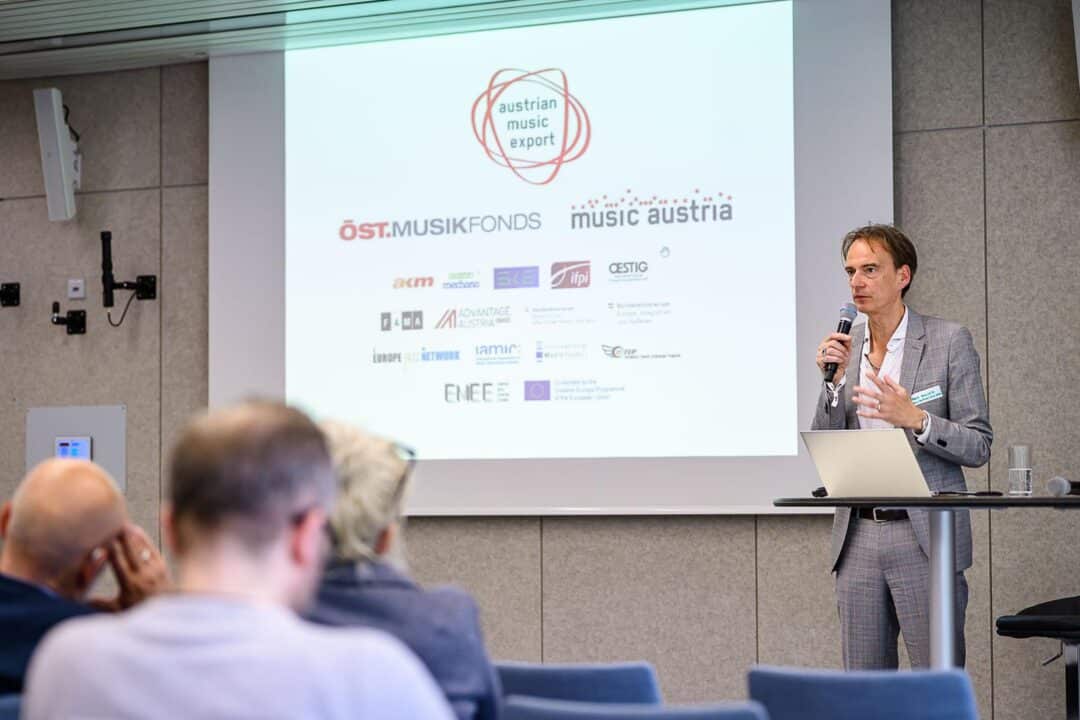
Franz Hergovich: The first was EMO, the European Music Office. I served on its board. It was a kind of lobbying organisation, primarily focused on the EU. Its members also carried out individual projects, some of which were very interesting and involved us as well. Diversidad, for example, was a hip-hop project organised by EMO. The European Music Office was also heavily involved with Eurosonic.
Later, I also served on the board of IAMIC, the international umbrella organisation for music information centres. And I’ve been on the board of EMEE almost since it was founded. That’s the network of European music export offices, which was established by a smaller group of former EMO members who wanted to continue their work after EMO came to an end.
For me, it’s an absolutely fantastic network. We’ve developed a really wonderful way of working together because there is no competition between the export offices. Everyone recognises that the global market is so vast that we don’t need to fight over how each country positions itself within it. Instead, we can genuinely support one another.
There’s also a shared understanding that the first priority should be to build a stronger, larger European market. Before we all head off to the US, we should really ask ourselves whether we can get Europe to the point the US has already reached in this respect. In the United States, it makes relatively little difference to my music career whether I was born in Chicago, San Francisco or New York.
It probably remains difficult if you’re from a rural area in Ohio or Tennessee, but even there, opportunities are certainly available. In Europe, however, it makes an enormous difference whether you’re trying to make music in Iceland, Bulgaria, France, Germany or Albania. Building a more integrated market across Europe is, in my view, an incredibly worthwhile and exciting undertaking.
That’s something EMEE repeatedly tries to support. In countries where the necessary structures don’t yet exist, where there are no export offices or funding bodies willing to support this kind of work, the network engages with the relevant authorities and ministries to explain what these initiatives can achieve.
The exchange within the network is excellent. We’ve implemented many projects together, and it has been enormously beneficial for us and for Austria. It’s simply great to have a trusted contact in another country whom you can call at any time and ask: What do you think of this festival, or whatever it might be?
It’s a fantastic network, and I’ve always really enjoyed being involved in it.
Your work wasn’t limited to music exports. You also played a key role in developing mica‘s comprehensive advisory services.
Franz Hergovich: I think that’s actually mica‘s most important service. It’s also something that sets us apart quite significantly from organisations in other countries, even those that may have more funding or other advantages. You can get free legal advice and have contracts reviewed and discussed with you. You can hardly find that anywhere else.
These services prevent a great many people from making serious mistakes. The industry is characterised by a considerable imbalance of power. On one side, you have people who really know how things work and make promises that are irresistible to a young person who wants to get on stage and build a career. They’d sign just about anything to get a foot in the door.
This imbalance has often led to musicians being exploited and offered very unfavourable contractual terms.
In some parts of the industry, I wouldn’t say this was necessarily malicious. It was often simply a matter of people not really knowing what they were doing and not being able to afford a lawyer to draw up a contract tailored to their needs. So they’d end up finding templates somewhere online or getting them from acquaintances, even though those contracts weren’t suitable for their situation at all.
These templates often came from major labels or other large record companies, where the other party was investing much more money and had far greater resources to advance the artists’ careers. That meant the terms could be different, including the percentages involved.
Looking back on your time at mica and your time as head of Austrian Music Export, which developments and moments did you find most exciting? And are there things you might have done differently?
Franz Hergovich: Looking back, one event that stands out for me is mica’s 15th-anniversary celebration in 2009. We put together some really great things, from an exhibition at mica that took visitors through the building to high-profile media partnerships. For example, we raffled off one-of-a-kind vinyl records featuring unreleased tracks by artists such as Fennesz. It was a fantastic project, and the whole team was really motivated. Within mica, it was the first major highlight I remember that created such a special atmosphere.
Another highlight for me was the first edition of Waves. By then, we’d already been active for several years and had built up an international network of contacts. We were able to demonstrate just how many people we could bring to Vienna for a festival like this. That was really exciting. Guests included people like Peter Jenner, Pink Floyd’s manager, who was still a real visionary at the time, as well as many others. The first Waves was a particularly memorable experience for me because I performed there with my band and also organised the conference. That was a real high point for me.
One thing I’m quite proud of is that we were involved in leading major European projects and studies. I also found the EU fact-finding missions particularly interesting. We investigated new markets for Europe and produced reports on our findings. This involved travelling to other countries and interviewing people from the music industry, for example in India, South Africa and Mexico. It was fascinating because these conversations gave us genuine insights and allowed us to bring home so many ideas. I always found the experience incredibly inspiring.
But the quieter highlights matter to me just as much: being able to support musicians over many years and see them succeed. I don’t want to single out too many examples, but I remember interviewing Dorian Concept during the first Popfest Wien sessions. I always thought he was one of the most exciting acts, and I had a feeling he would make it internationally. Even right up until the end, I was still able to help him with certain questions. Wherever I travelled, people in his particular niche knew who he was. Within that scene, he really is a global superstar. I think that’s fantastic.
My goal was never to turn individual artists into hits. What I find most exciting is when something proves sustainable: when someone uncompromisingly pursues what they want to do, even if it might not be suitable for mainstream radio, and still manages to make a living from it over several decades. That’s what I find truly fascinating, because it’s also where the most interesting artistic work tends to emerge.
You also asked what we could have done differently. We certainly didn’t get everything right. But there’s nothing where I’d say we made a serious mistake and that I would approach things completely differently now.
Ultimately, I’d say that today I might be less inclined to fight every battle and would try to approach certain things with more patience and understanding. I think I’ve learned a lot about how I work with people. At the beginning, I was probably rather impatient and very focused on achieving good results according to my own ideas. I may also have put people under pressure.
Over the past few years, I’ve learned that it’s more productive to take greater account of each person’s strengths and weaknesses, recognise what they’re capable of, and find different ways of getting to where you want to go. I see that more as a matter of personal development.
But there’s nothing where I’d say I would have wanted to do everything differently. There were repeated power struggles in this industry that seemed unnecessary and that you’d gladly do without. I don’t know whether they were actually necessary to achieve everything we did.
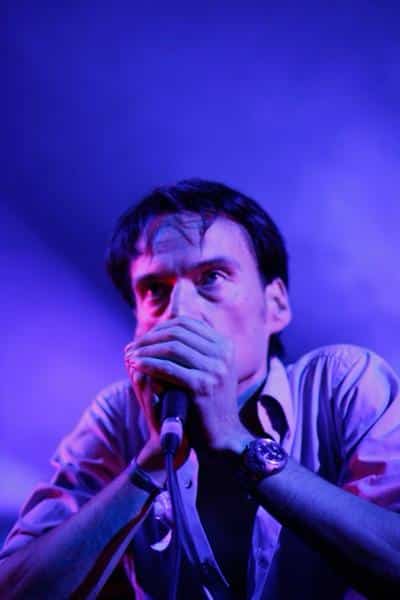
What are you going to miss the most?
Franz Hergovich: I don’t know yet. I have to say that I really enjoyed the job, so there will certainly be things I’ll miss. On the one hand, it was wonderful to receive so much positive feedback. That’s one of the real privileges of this job. You provide services free of charge that genuinely help people. That’s fantastic. Naturally, they appreciate it and let you know, and you hear that a lot. It was lovely, and I may well miss that.
I’ll probably miss travelling, too. It could be incredibly exhausting at times, but it was always enriching as well. And it was great to meet people from this international network regularly. Many friendships grew out of those encounters.
During the periods when I wasn’t doing well, I received an incredible number of kind messages from people all over the world. That really helped me, too. But it will probably be difficult to maintain all those contacts going forward, so that may be something I miss as well. I don’t know yet.
At the same time, I’m already quite comfortable with the idea of moving on. Because I think that, at some point, especially in retrospect, you realise that a job isn’t necessarily about how much money you earn or what positions you’ve held. Ultimately, what matters is whether you’ve made a difference, whether your work has had an impact, whether you’ve been able to help people, and whether you’ve made the world a little better rather than worse in some way. And I think my work has made a difference to some people.
That’s worth an enormous amount. I’m genuinely grateful that I had the opportunity to do this work. In my first jobs in the music industry, I had the chance to make people happy through good music in various ways. I might recommend an album, play a record or organise a concert. All of that is wonderful. But I think this goes a level deeper.
When you can genuinely help people pursue something that matters so much to them — their artistic careers — and move forward, and they tell you that you’ve sometimes managed to make that possible, that feels good. It makes me happy.
And you can’t do this forever, anyway. In my case, it’s coming to an end a little earlier than planned. But ultimately, I would have stopped at some point regardless.
I also have the reassuring feeling that the work will continue. It’s not as though everything comes to an end just because I’m no longer involved. Other people will take it forward. And that’s great.
Your departure comes at a time when AI is beginning to change the world — and the music industry, of course. Are you perhaps a little relieved that, at least professionally, you no longer have to deal with it?
Franz Hergovich: I have to admit that I’m not unhappy about the prospect of not having to experience all of this as an active participant. Living through the decline of the music industry brought about by digitalisation was enough. I don’t need to go through that again. (laughs) This is going to be such a radical transformation that we probably can’t even imagine what it will look like.
Of course, I have my own ideas about it. I believe that all kinds of functional music — music designed primarily for a particular purpose — will no longer be made by humans. Probably even the average chart hit won’t be made by people anymore. And all playlists will be generated artificially, too. Artistically speaking, perhaps that won’t be such a great loss. From an aesthetic point of view, you might not really care whether a machine or a human produced the sonic babble playing in the background while you’re in a sauna.
But economically, there’s a huge difference between a small number of technology providers making vast amounts of money and the many people working in the music industry who need that income to finance their own artistically significant projects on the side. We know that musicians often have to juggle several jobs. Many teach or do studio work to be able to pursue their own artistic projects. If those sources of income disappear, we have to ask how many of them will still be able to make their own music. And it’s not just music-making that will be affected. Many other areas will be replaced, too. Everything involving promotion, the dissemination of news and writing texts — I don’t know how many people will still be working in those fields.
Of course, there are positive aspects as well. These technologies can help people make music in ways that wouldn’t otherwise be possible for them. It’s also conceivable that, by drawing on the entire musical heritage of humanity, AI could create something new that individual human minds, with their more limited capabilities, would not be able to come up with. That could even be artistically interesting, provided people make good use of it. Economically, however, I see the whole thing as highly problematic.
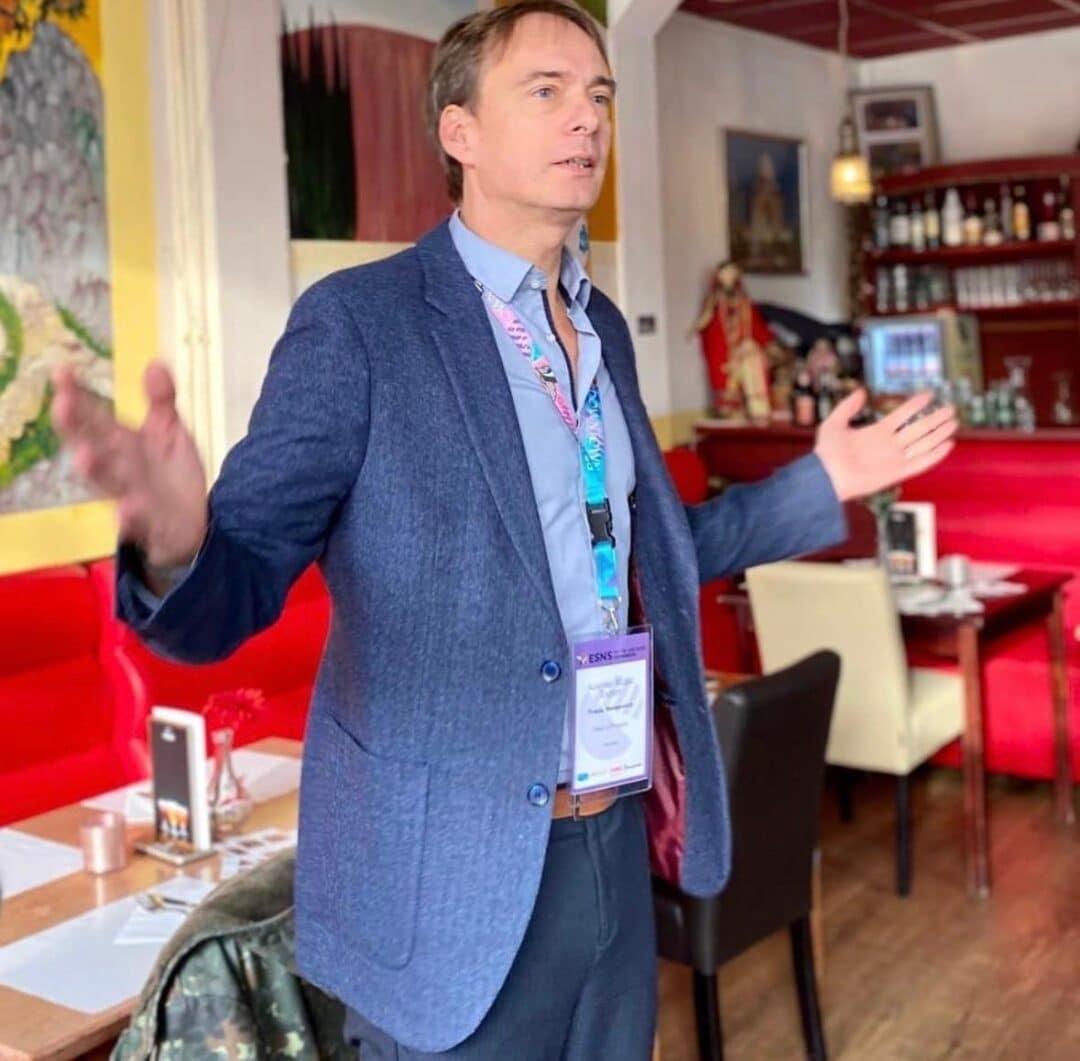
One glimmer of hope is that the desire to experience authentic music and genuine human stories will remain. Perhaps we’ll end up with art music and live music being made by humans, while machines produce everything else — the part of the market that generates far more money. The question, of course, is how these two worlds will affect each other. If music made by real people no longer reaches a large audience, no longer enters the charts or gets played on the radio, how will musicians find an audience when they go on tour, when people want to see real human beings on stage?
I think the consequences will be far more drastic than those of digitalisation back then, because at the time, things essentially just shifted from one place to another. One thing that may be similar, though, is that the people making money in the music industry are, in reality, technicians who have nothing to do with music itself.
There’s also a certain sadness in looking back at how things used to be. If you trace the whole story back to the 1980s, when I started working in a record shop, it was an industry made up of people who were passionate about music. What mattered most to them wasn’t how much money they could make, but their love of music. People at different ends of the industry worked together, whether they were writing about music, working in radio or record shops, or making music themselves. Of course, it was a huge business even then. But ultimately, they were all genuine music fans.
Dear Franz, thank you very much for the interview.
Michael Ternai
Translated from the German original on the mica – music austria site.