
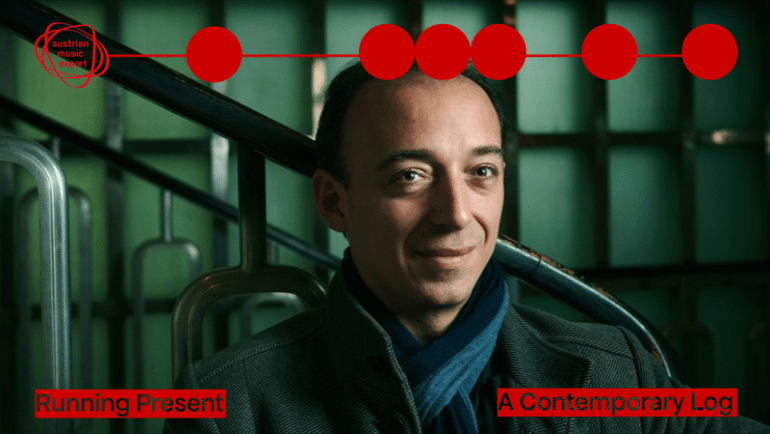
Vienna-based Thomas Wally has long been an established presence in Austria’s music scene, both as a composer and a violinist. His new works emerge from the interplay between these two professions and are often taken up and performed by other musicians well beyond their premieres. On 25 November, Wally himself will perform as part of the WIEN MODERN festival. With “Entre Parenthèses”, he now presents his second portrait album after a six-year interval, offering a relatively up-to-date insight into his creative process. And it is an album that makes you sit up and listen. Christian Heindl explores this attractively designed release and gathers some insights from the artist himself for our latest edition of Running Present – A Contemporary Log.
It would be impossible to claim that a single note in Thomas Wally’s compositions is not exactly where he intends it to be, judging by his sketches, drafts and scores, which are – to put it euphemistically – complex and constructed according to rigorous mathematical principles. Whether they are performed with the same degree of precision is another matter, depending on the interpretation. At least at their premieres, however, performances are often given by Wally himself and his closest colleagues, including ensemble LUX, with whom he will soon appear again at Wien Modern. Before turning to the new album, it is worth saying a few words about this ensemble, which he co-founded more than two decades ago and which clearly remains one of his enduring passions.
It is quite common for young musicians to form ensembles during their studies, only for these groups to dissolve a few years after graduation as their members pursue different paths. LUX is an exception. Thomas Wally recalls its beginnings:
“My work with ensemble LUX goes back, believe it or not, to 2004. The first concert under the name ensemble LUX took place in January 2005. At the time, we were a collective of composers and performers whose members organised concerts together and sometimes performed in them themselves. Over time, the focus shifted increasingly towards performance, and eventually we became a string quartet. After Bojidara Kouzmanova-Vladar and Julia Purgina left the quartet, we spent some time looking for new members. We have now been playing in our current line-up, with Louise Chisson on violin and Nora Romanoff-Schwarzberg on viola, for more than ten years.”
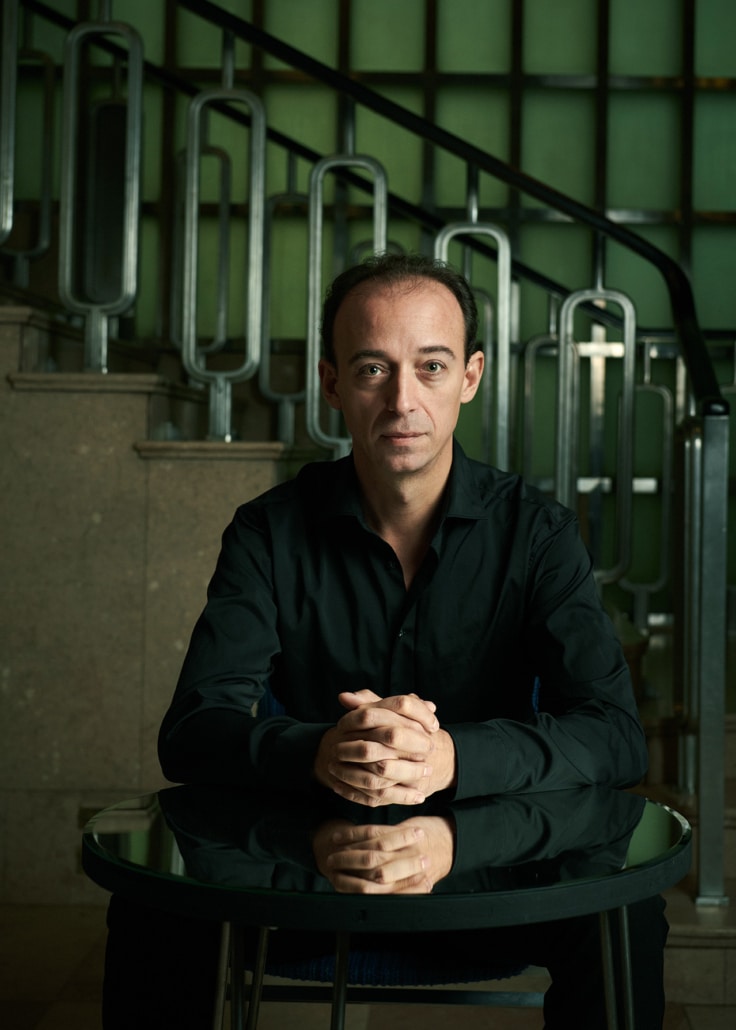
The Wien Modern concert on 25 November 2026 promises to be particularly noteworthy. At Vienna’s Arnold Schönberg Center, the programme will feature the world premiere of Margareta Ferek-Petrić’s string quartet “The imbalance of air-conditioned spaces (Heatwave Joy No. 2)”, composed this year, followed by Schoenberg’s Third String Quartet, written almost exactly a century earlier. Wally will also serve as the concert’s presenter.
For him, the programme exemplifies the ideals of LUX:
“The concert at the Arnold Schönberg Center is representative of our current work and artistic concerns. It connects the very latest music – a world premiere by Margareta Ferek-Petrić – with a major work from the past hundred years, Schoenberg’s first twelve-tone string quartet. We have developed an artistic friendship with the Arnold Schönberg Center. Presenting concerts with analytical commentary is not an isolated occurrence either, but a recurring feature of ensemble LUX performances.”
Thomas Wally’s latest major project deserves just as much attention as his current concert activities: the recording and production of his second portrait album, “Entre Parenthèses”, released by col legno this autumn. It is a recording that truly rewards close listening.
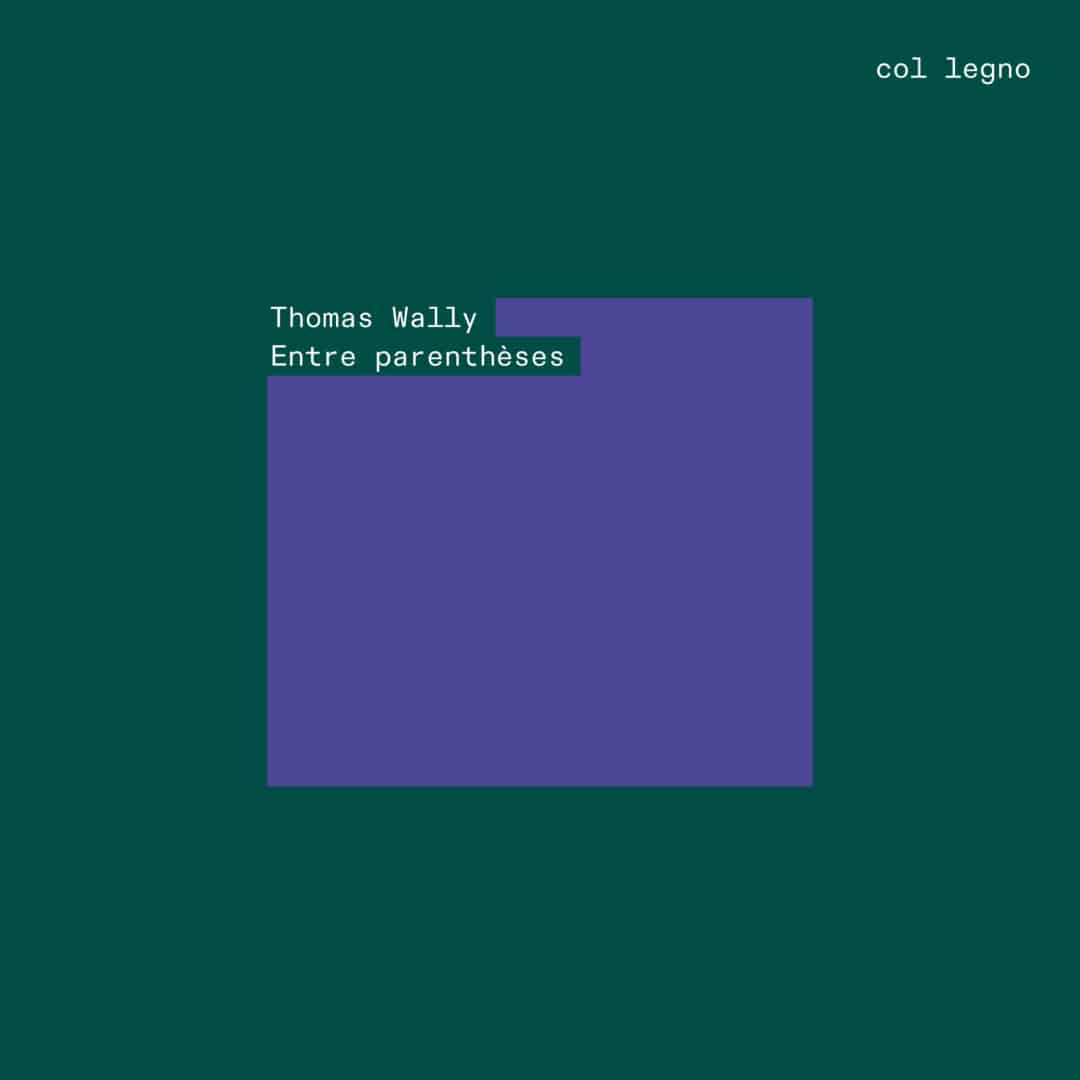
It also deserves a closer look. The cover, featuring an almost-square purple shape against a dark olive-green background – graphic designers will know the precise colour terminology – is striking and engaging in its own right. Naturally, that depends on individual taste, but the same applies to the music itself.
Thomas Wally’s music is not something that reveals itself immediately to most listeners. It requires a willingness to engage with it and, ideally, to listen repeatedly – something the album makes possible. The effect is essentially the same as encountering an unfamiliar Classical or Romantic symphony: the more often one listens, the more the music reveals itself. Its structures and subtleties gradually become transparent. To put it somewhat poetically, one becomes one with the sound.
“Entre Parenthèses” contains three works composed over the past nine years, presented in reverse chronological order. Is this a coincidence, or is there a deeper dramaturgical intention?
Thomas Wally explains the selection:
“The order of the pieces on the album emerged quite logically. The Concertino, being a studio recording and a concert piece, comes first. The shortest work, ‘Les Îles des nombres V’, occupies the middle position, while the considerably longer third piece concludes the album. Like the first, it is performed by PHACE, which naturally creates a kind of overarching arc.”
Without wishing to praise the composer too extravagantly, this sequencing certainly seems to work.
The opening Concertino (2024) is immediately fascinating. The concerto principle – the exchange and interplay between violin and ensemble – unfolds like a conversation without words. It is captivating precisely because listeners are free to imagine the content of this dialogue for themselves.
This is a conversation based on cooperation rather than confrontation, a process of questions and answers, a form of direct communication. Its refined character becomes immediately apparent through the brilliant playing of soloist Ivana Pristašova-Zaugg and Ensemble PHACE, conducted by Michael Wendeberg.
Once again, Wally emerges as both a meticulous craftsman and a thinker. He has a clear explanation for why this work became a Concertino rather than a second violin concerto following his 2009 composition “…und ein einziger Ton weinte in einem Frühling…”:
“The term ‘concerto’ would have felt too overused to me; ‘concertino’ is less worn out. At the same time, as a single-movement work lasting approximately 20 minutes by design, it is relatively compact. The instrumentation is also on the lean side, with just six instruments in the ensemble.”
The mathematically constructed approach mentioned earlier may be more readily apparent in the second piece, “Les Îles des nombres V” (2020). Here, the Munich-based ensemble risonanze erranti, conducted by Peter Tilling, undertakes a demanding feat of precision, delivering a performance that must have delighted even a musician as extraordinarily self-critical as Thomas Wally.
The inclusion of instruments such as vibraphone, harp and celesta raises questions about the relationship between structure and sound. Wally himself now distances his compositional approach somewhat from the notion of mathematical construction:
“By now, I would no longer describe the construction method as mathematical, but rather as strongly determined by thinking in numbers. The fact that the harmonic framework established in advance is repeatedly played by this trio creates a peculiar situation: what we perceive as decorative touches of colour actually contains the notes and intervals that are essential to the work’s construction.”
Like “Les Îles des nombres”, “Caprice” is a recurring title in Thomas Wally’s catalogue, suggesting certain consistent threads running through his creative work.
“Caprice (VIII) pa[ren]thétique” (2017) – once again superbly performed by PHACE – is perhaps the most introspective of the album’s three works.
Those who look closely and appreciate the intellectual wordplay will sooner or later recognise that the parenthesis (parenthèse) has been inserted into the word pathétique, evoking passion and emotional intensity.
It is almost as though sudden, perhaps unexpected or even subconscious thoughts interrupt the flow of the music. The result gives the impression of a free interplay of ideas and developments, although perhaps everything has been meticulously planned from the outset.
Wally’s first album, “Jusqu’à l’aurore”, also released by col legno, offered a fascinating insight into a decade of work by a composer then in his late thirties. The new release picks up directly where its predecessor left off, presenting another survey of his compositions and already sparking curiosity about what the next eight to ten years might bring.
If reviewing a new album also requires a critical perspective – and surely it does – the only immediate reservation would concern the slim booklet, which is available exclusively in English. The absence of German, the native language of the composer, performers and record label, is a minor shortcoming, although it is probably due to space limitations rather than any sense of arrogance.
The sound quality, however – and that is ultimately what matters most – is exquisite.
The three compositions and their recordings are compelling. And that is perhaps the highest compliment one can pay to an album of contemporary music.
Christian Heindl
Links
ensemble LUX: Impulse der Moderne
Wed., 25. November 2026, 7:30 pm
Arnold Schönberg Center
as part of the Wien Modern festival 2026
Thomas Wally
Thomas Wally (music austria Musikdatenbank)
Thomas Wally: Entre Parenthèses (col legno)
ensemble LUX
ensemble LUX (music austria Musikdatenbank)
Translated from the German original by Arianna Alfreds.