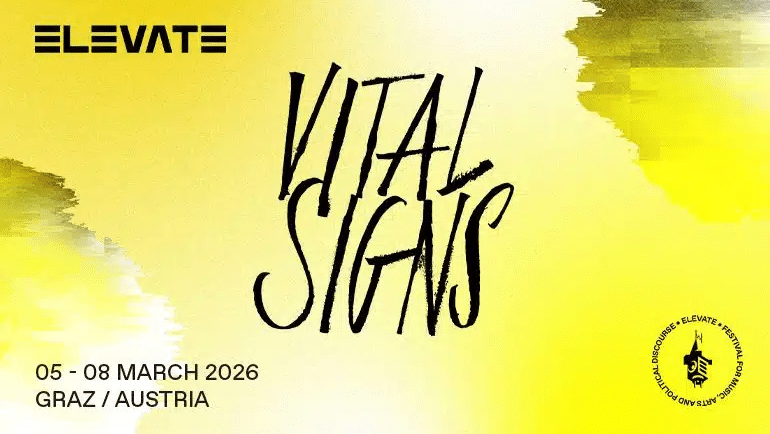
From March 5 to 8, 2026, the Elevate Festival returns to Graz for its 22nd edition. Under the theme “Vital Signs”, the festival explores contemporary states of cultural, social, and artistic vitality—what is still resonating, what is exhausted, and what new forms may emerge. Across 15 venues, more than 150 artists and over 30 international speakers connect music, discourse, and visual art.
Discourse, Art, and European Cooperation
The discourse programme at the Heimatsaal of the Graz Museum of Folk Life features talks and discussions with international voices including Douglas Rushkoff, Cathryn Clüver Ashbrook, Gilda Sahebi, Wolfgang Palaver, Baro Vicenta Ra Gabbert, and Christian Schiffer.
The visual arts strand, Elevate Arts, begins ahead of the festival with the exhibition Vital Signs in Public Space (16 February–15 March), presenting works by local and international artists across public spaces in Graz. A central artistic focus is placed on Maxime Denuc, who contributes an installation at the Mausoleum, Music for Elevators, and an organ concert at Graz Cathedral.
Elevate 2026 is further shaped by commissioned works and residencies developed within the Creative Europe projects TIMES and New Perspectives for Action, highlighting the festival’s commitment to international cooperation.

Concerts, Performances & Sonic Practices
In 2026, Elevate presents its most extensive music programme to date: around 150 musicians perform across 12 stages, spanning club culture, concerts, and interdisciplinary formats. Venues range from Dom im Berg and Orpheum to Graz Cathedral, the Mausoleum, Helmut List Hall, GRNGR, Parkhouse, and ppc.
The programme brings together genre pioneers and emerging artists, avant-garde ensembles and club producers, reflecting contemporary musical currents in all their diversity.
Pop Affinities Beyond the Mainstream
Pop-oriented sounds play a visible role in the 2026 programme. Festival closer Marc Almond presents Soft Cell classics alongside solo material. Anika delivers introspective indie pop with a cool, hypnotic edge, while Herbert & Momoko move between intimate songwriting and dancefloor-driven electronics. Maria Somerville represents a new underground pop sensibility, blending dream pop, ambient, and experimental folk.
Opening Night: Immersive Compositions and AV Performances
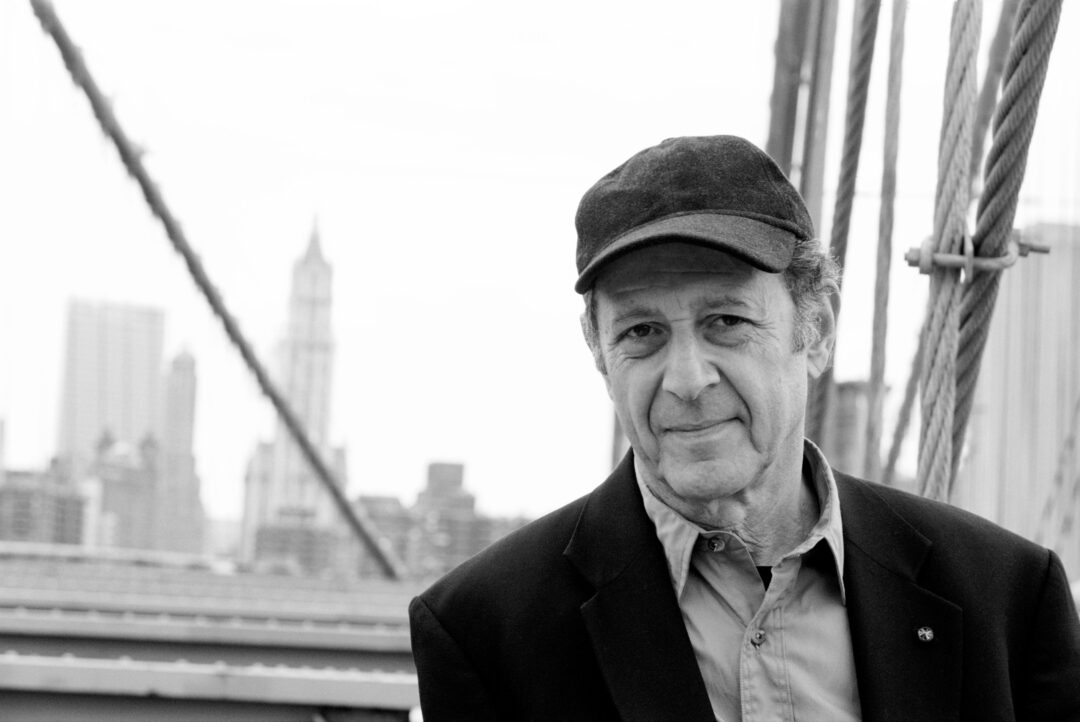
The opening night foregrounds experimental music with Steve Reich’s Music for 18 Musicians, performed by PPCM students under the artistic direction of Klangforum Wien. Bendik Giske follows with a solo performance situated between minimalism, jazz, and ritual intensity.
At Helmut List Hall, audiovisual works take centre stage: Amnesia Scanner (with Freeka Tet), Zora Jones, and PLF (with Patrik Lechner) present immersive, high-impact audiovisual performances.
Sound Production as Resistance and Ritual
The following days feature Cabaret Voltaire on their final joint tour, Dame Area, bela, and Indonesian duo KUNTARI, whose performances connect electronic music, noise, ritual, and political expression.
Experimental Highlights
Maxime Denuc’s site-specific organ works are joined by turntablist Mariam Rezaei and Vienna-based duo DÄ LIVER (Maja Osojnik & Stina Fors), presenting a commissioned performative work.
A central festival highlight is the TIMES commission Pitch, Pigeon, Puerta by Kelman Duran, developed with AGF, Kianí del Valle and Theresa Baumgartner, addressing migration, voice, and embodied performance.
Local Indie and Club Programme
Local acts including Eli Preiss, Beaks, UCHE YARA, and Aki Traar appear alongside an extensive club programme. Highlights include Kittin, Modeselektor, Josey Rebelle, Polygonia, DJ Storm, Pinch, DJ Spinn, and numerous local DJs and collectives. The festival concludes with a daytime closing at Parkhouse.